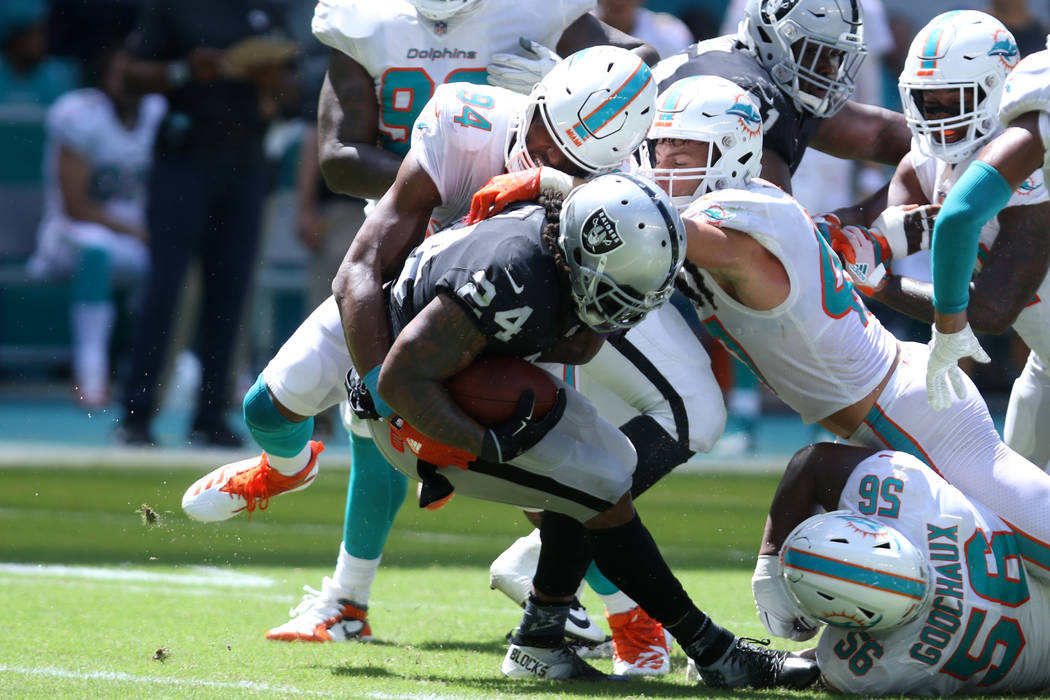
If you were to have told me before Sunday that one of the craziest games of the week would be between the Raiders and the Dolphins, well… I probably would’ve believed you. I’m a pretty believing guy. But this game was in fact a wild one, so let’s jump into it.
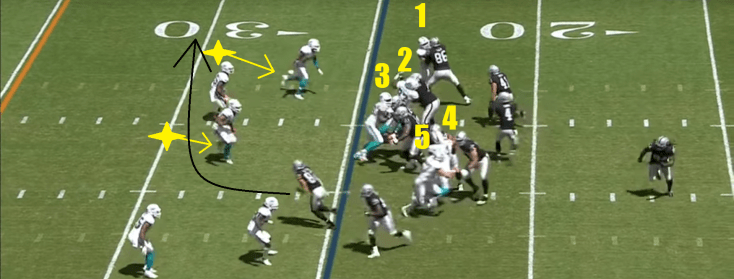
Through the first couple of weeks, Jon Gruden’s had a tendency to pass out of sets with 3 or more receivers, and rush out of sets with extra blockers in (obviously every team does that to a degree, but Oakland does even more so). While it’s definitely more fun to see teams get creative and go against the grain on certain plays, throwing the ball out of obvious passing sets and running the ball out of obvious rushing sets has worked out pretty well for the Raiders offense for two weeks. So on the second play of the game, when Oakland put a tight end and a fullback in the game, Miami was expecting a rush. The Dolphins rushed 5, and had another 2 linebackers creep forward, ready to stop a run. Instead Carr was able to throw over their heads, hitting Jordy Nelson. Nelson had plenty of space, and was able to pick up 61 yards. It was a great play design, and led to Oakland scoring a touchdown on that drive.
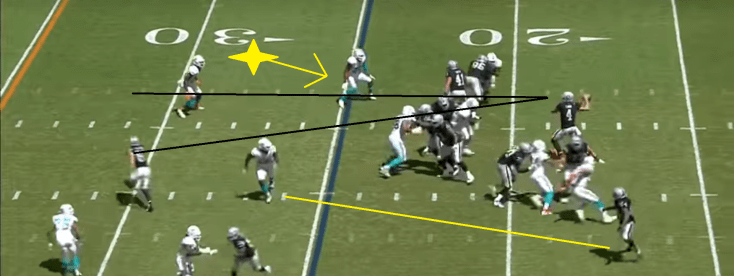
I mentioned earlier that this was one of the craziest games of the week, and it really was. A couple of crazy stats jump out right away, first Oakland gained a respectable 6.11 yards per play, but meanwhile Miami gained 9.81 yards per play. That’s a pretty crazy difference it it’s own right, but there was a stat with an even wilder differential in this game, as Oakland had 78 plays from scrimmage, and Miami only had 45. The Raiders ran 33 more plays than the Dolphins, which was the highest disparity of any game so far this season. Another crazy stat, Miami still managed to have more passing yards than Oakland, despite throwing it 15 less times. That’s not a slight on Derek Carr either, he passed for an impressive 8.8 yards per play, but Tannehill passed for a ridiculous 12.6 yards per play (plus there was another man who passed for a 51 yard gain, which I’ll get to later on).
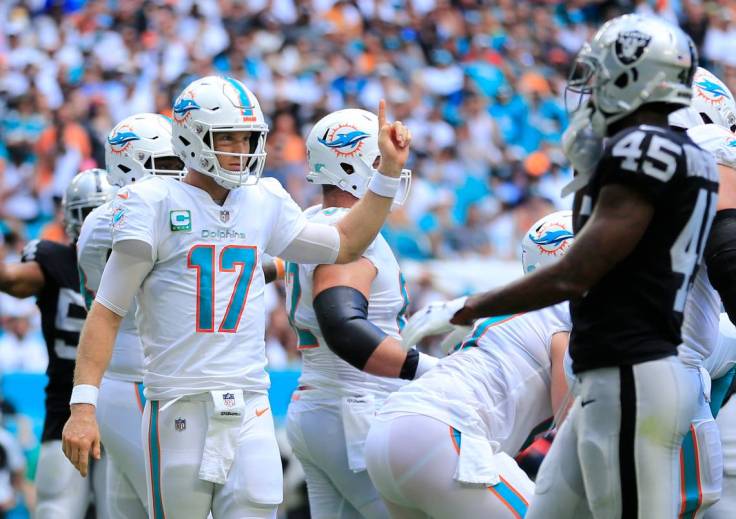
Going back to the 61 yard play I talked about earlier, after seeing that I expected to see a bit more trickery from Oakland. They did pass a lot more out of multiple tight end sets, in fact 9 of their 13 plays from those sets were passes, and that worked out pretty well. They only gained 8 yards in their 4 rushing attempts from those sets, but they gained 8.56 yards per passing play from those sets. They also had a 13 yard passing play out of a 3 tight end set. However when it came to fullbacks it was a different story, Oakland did a great job selling a rush on that aforementioned 61 yard play, but in the 7 other times they had a fullback in, they were rushes. Obviously it’s not like they should’ve constantly passed with a fullback in, the main reason it worked the first time was because of the element of surprise. But the fact that they never tried it again is a bit head scratching.
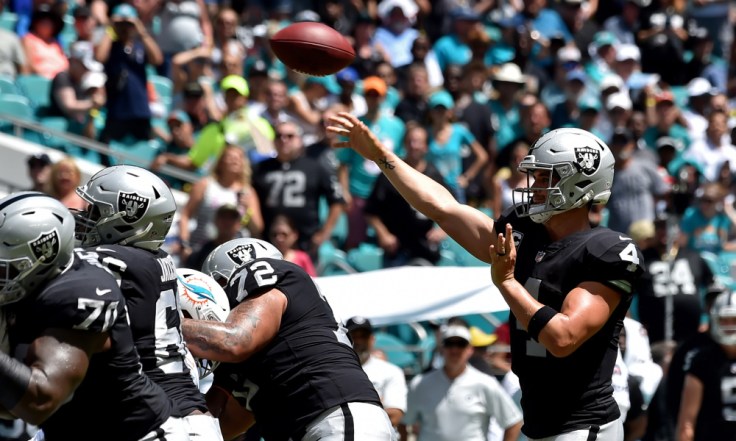
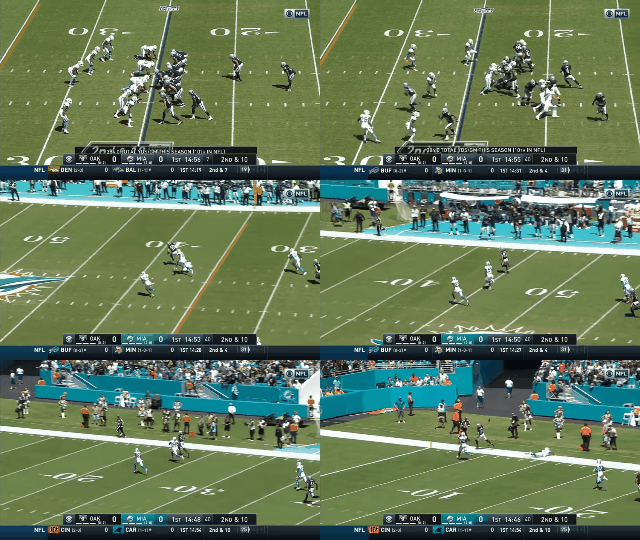
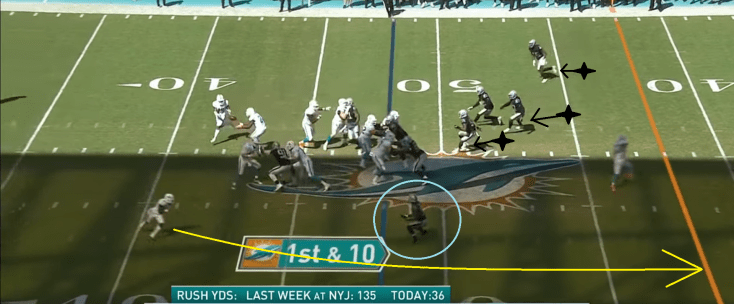
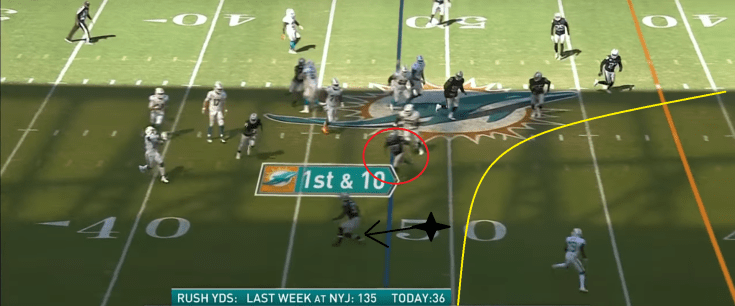
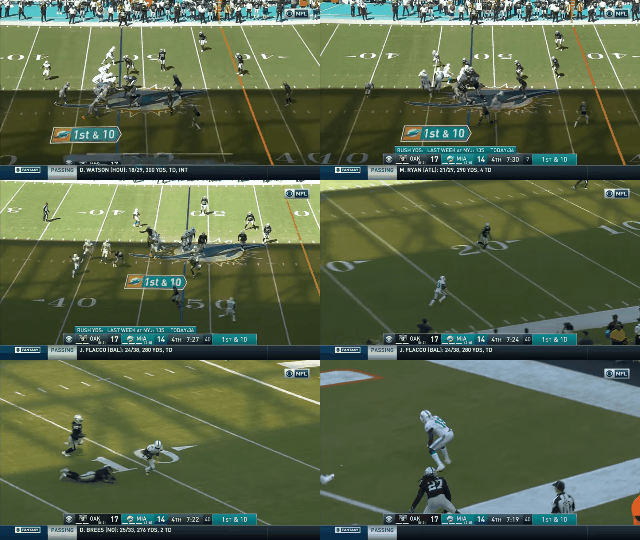
For Miami, their biggest strength was out of obvious passing sets, which makes sense when you consider how well Tannehill was throwing the ball. Out of their 14 passing plays from a standard set (a set with 3 receivers, a tight end and a halfback) they gained 9.43 yards per passing play. And out of the 8 plays out of a 4 wide set, all 8 were passes, and they averaged 10.38 yards per play. Big plays were working for the Dolphins all game, after their third drive, they had at least 1 play where they gained 19 or more yards in every drive except for one (not counting the drive at the end where they just ran the clock out). Passing out of just about any set worked for Miami. The three times they passed out of a 2 tight end set, they gained 21, 18 and 74 yards. Oddly enough the only set passing didn’t work out of was a 5 wide set. They only tried it twice, and had an incompletion and a 9 yard sack. It’s totally a small sample size and I wouldn’t really read into it at all, but I thought it was a little interesting. They also only used a set with 2 receivers, a halfback, a tight end and a fullback once, and it was a big one, so I broke it down below.
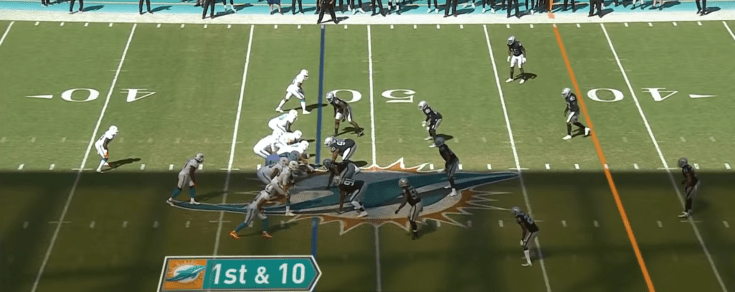
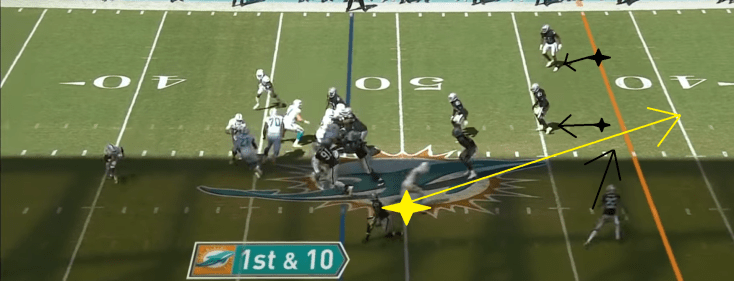


For Oakland, using a standard set was by far the most effective set for them. They gained 7.38 yards per play, and 10.07 yards per passing play from those sets. However, throwing from 4 wide sets was a different story. The Raiders gained 26 yards in their 3 rushing attempts from that set, but they gained just 4 yards from the 11 passing plays out of that set (0.36 yards per play). Not to mention the interception with under 3 minutes left was out of that set as well. As a whole I thought Oakland did a fine job offensively, but they really struggled to stop Miami’s offense, and that was the difference on Sunday.
 NerdSports
Leave a comment